<?xml version="1.0" encoding="UTF-8"?><feed
	xmlns="http://www.w3.org/2005/Atom"
	xmlns:thr="http://purl.org/syndication/thread/1.0"
	xml:lang="en-US"
	>
	<title type="text">Binghamton University Research News</title>
	<subtitle type="text">Insights and Innovations From Binghamton University</subtitle>

	<updated>2024-01-17T21:03:10Z</updated>

	<link rel="alternate" type="text/html" href="https://discovere.binghamton.edu" />
	<id>https://discovere.binghamton.edu/feed/atom</id>
	<link rel="self" type="application/atom+xml" href="https://discovere.binghamton.edu/feed/atom" />

	
	<entry>
		<author>
			<name>Hannah Maria Hayes</name>
					</author>

		<title type="html"><![CDATA[Microelectronics industry has its eye on grad student’s research]]></title>
		<link rel="alternate" type="text/html" href="https://discovere.binghamton.edu/student-spotlights/electrospray-8588.html" />

		<id>https://discovere.binghamton.edu/?p=8588</id>
		<updated>2024-01-17T21:03:10Z</updated>
		<published>2024-01-17T08:00:53Z</published>
		<category scheme="https://discovere.binghamton.edu" term="Students" /><category scheme="https://discovere.binghamton.edu" term="electronics" /><category scheme="https://discovere.binghamton.edu" term="engineering" /><category scheme="https://discovere.binghamton.edu" term="mechanical engineering" />
		<summary type="html"><![CDATA[Emma Pawliczak’s research could play an important role in manufacturing the next generation of electronics. It has already garnered the attention of the microelectronics and electronics packaging industries.]]></summary>

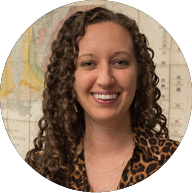
					<content type="html" xml:base="https://discovere.binghamton.edu/student-spotlights/electrospray-8588.html"><![CDATA[<p><img decoding="async" class="alignleft size-full wp-image-8593" src="https://discovere.binghamton.edu/wp-content/uploads/2024/01/pawliczak_02.jpg" alt="" width="132" height="133" srcset="https://discovere.binghamton.edu/wp-content/uploads/2024/01/pawliczak_02.jpg 132w, https://discovere.binghamton.edu/wp-content/uploads/2024/01/pawliczak_02-120x120.jpg 120w" sizes="(max-width: 132px) 100vw, 132px" />Emma Pawliczak’s research could play an important role in manufacturing the next generation of electronics. It has already garnered the attention of the microelectronics and electronics packaging industries.</p>
<p>Pawliczak, a mechanical engineering doctoral student at Binghamton University, has won several prizes, most recently in October, when she received the Best Student Poster Award during the 56th International Symposium on Microelectronics, held by the International Microelectronics Assembly &amp; Packaging Society in San Diego.</p>
<p>Pawliczak’s research involves electrospray technology — employing electricity to disperse a liquid or fine aerosol — to create a thin (as in nanoparticle thin) film for electromagnetic interference (EMI) protection in electronics manufacturing. The silver film provides a low-cost, space-conscious way to protect against EMI.</p>
<p>“There is a push in the industry to miniaturize devices, from cell phones to hearing aids, so it’s important to maximize the available internal space,” Pawliczak says. “The idea is that electrospray will open the doors for many different applications of this technology.”</p>
<p>Pawliczak conducts her work in the Microfluidics and Multiphase Flow Laboratory of Paul R. Chiarot, professor and chair of the Department of Mechanical Engineering. This research was a new direction for Chiarot’s group when the Semiconductor Research Corp., a research consortium that promotes collaborations among academic institutions, technology companies and government agencies, presented the research opportunity in 2020.</p>
<p>“Emma took on this project and ran with it, and at this point now has complete ownership of it,” Chiarot says. “She directs it herself, interacts with company liaisons at Texas Instruments, NXP Semiconductors and Intel, and she’s gone on to make great contributions in this space. She is a very careful and thoughtful scientist.”</p>
<p>The New Hampton, N.Y., resident knew from an early age that she wanted to pursue mechanical engineering. “I watched my father bring home drawings and documents throughout my life, coming up with creative solutions to complex problems,” she says. “Instead of looking at obstacles as work, he looked at them like puzzles. So I wanted to be like my dad. I thought I was going to go into construction, but now I work on a much different size scale, in the micro and nano range.”</p>
<p>It was an easy decision to attend Binghamton when she first toured the campus as a high school junior. “It was an immediate connection. I loved the energy of the campus,” she says. “As soon as I got my early action acceptance letter, I confirmed my enrollment the same day.”</p>
<p>Pawliczak received her undergraduate degree in mechanical engineering from Binghamton in 2020 and then stayed to continue her graduate studies. Her career, so far, includes three peer-reviewed journal publications and seven conference paper publications. She has given more than 20 conference talks and poster presentations across the country.</p>
<p>She hopes to complete her doctorate in 2025.</p>
<p>“I will be interning at Intel this summer and I am extremely excited for the experience,” Pawliczak says. “I often go back and forth between entering industry or pursuing a career in academia, but I look forward to any and all paths my degree may lead me.”</p>
]]></content>
		
			</entry>
		<entry>
		<author>
			<name>rad</name>
					</author>

		<title type="html"><![CDATA[Modern medicine traces its scientific roots to the Middle Ages]]></title>
		<link rel="alternate" type="text/html" href="https://discovere.binghamton.edu/research-in-the-news/medievaldoctors-8520.html" />

		<id>https://discovere.binghamton.edu/?p=8520</id>
		<updated>2023-11-15T21:31:25Z</updated>
		<published>2023-11-15T21:31:25Z</published>
		<category scheme="https://discovere.binghamton.edu" term="Research In The News" /><category scheme="https://discovere.binghamton.edu" term="history" /><category scheme="https://discovere.binghamton.edu" term="medicine" /><category scheme="https://discovere.binghamton.edu" term="medieval history" />
		<summary type="html"><![CDATA[Contrary to popular belief, early medieval doctors relied on rational deduction to understand and treat disease, Binghamton historian Meg Leja writes in Smithsonian Magazine.]]></summary>

					<content type="html" xml:base="https://discovere.binghamton.edu/research-in-the-news/medievaldoctors-8520.html"><![CDATA[<p>Contrary to popular belief, early medieval doctors relied on rational deduction to understand and treat disease, Binghamton historian Meg Leja <a href="https://www.smithsonianmag.com/history/modern-medicine-traces-its-scientific-roots-to-the-middle-ages-180983213/">writes in Smithsonian Magazine.</a></p>
]]></content>
		
			</entry>
		<entry>
		<author>
			<name>admin</name>
					</author>

		<title type="html"><![CDATA[Upstate NY’s energy makeover]]></title>
		<link rel="alternate" type="text/html" href="https://discovere.binghamton.edu/videos/upstate-nys-energy-makeover-8502.html" />

		<id>https://discovere.binghamton.edu/?p=8502</id>
		<updated>2023-10-24T19:45:21Z</updated>
		<published>2023-10-24T19:31:03Z</published>
		<category scheme="https://discovere.binghamton.edu" term="Videos" /><category scheme="https://discovere.binghamton.edu" term="Fruit Flies" /><category scheme="https://discovere.binghamton.edu" term="Sad Smiles" />
		<summary type="html"><![CDATA[NENY and Binghamton University are committed to establishing New York as a national hub of battery innovation.
]]></summary>

					<content type="html" xml:base="https://discovere.binghamton.edu/videos/upstate-nys-energy-makeover-8502.html"><![CDATA[<p><iframe title="Upstate NY’s Energy Makeover: Building the Battery-Powered Future in New York" width="960" height="540" src="https://www.youtube.com/embed/wJK-fZCf_oQ?feature=oembed" frameborder="0" allow="accelerometer; autoplay; clipboard-write; encrypted-media; gyroscope; picture-in-picture; web-share" allowfullscreen></iframe></p>
]]></content>
		
			</entry>
		<entry>
		<author>
			<name>rad</name>
					</author>

		<title type="html"><![CDATA[Binghamton-led battery initiative named federal Tech Hub]]></title>
		<link rel="alternate" type="text/html" href="https://discovere.binghamton.edu/news/techhub-8499.html" />

		<id>https://discovere.binghamton.edu/?p=8499</id>
		<updated>2023-10-24T19:10:31Z</updated>
		<published>2023-10-24T17:00:02Z</published>
		<category scheme="https://discovere.binghamton.edu" term="News" /><category scheme="https://discovere.binghamton.edu" term="batteries" /><category scheme="https://discovere.binghamton.edu" term="battery" /><category scheme="https://discovere.binghamton.edu" term="clean energy" /><category scheme="https://discovere.binghamton.edu" term="environment" /><category scheme="https://discovere.binghamton.edu" term="NENY" /><category scheme="https://discovere.binghamton.edu" term="Schumer" /><category scheme="https://discovere.binghamton.edu" term="smart energy" /><category scheme="https://discovere.binghamton.edu" term="whittingham" />
		<summary type="html"><![CDATA[​The federal government designated the New Energy New York (NENY) project led by Binghamton University a hub for battery innovation in a series of announcements Oct. 23.]]></summary>

					<content type="html" xml:base="https://discovere.binghamton.edu/news/techhub-8499.html"><![CDATA[<p>​<img fetchpriority="high" decoding="async" class="alignleft size-full wp-image-8506" src="https://discovere.binghamton.edu/wp-content/uploads/2023/10/batterytech_02.jpg" alt="" width="440" height="254" srcset="https://discovere.binghamton.edu/wp-content/uploads/2023/10/batterytech_02.jpg 440w, https://discovere.binghamton.edu/wp-content/uploads/2023/10/batterytech_02-300x173.jpg 300w" sizes="(max-width: 440px) 100vw, 440px" />The federal government designated the New Energy New York (NENY) project led by Binghamton University a hub for battery innovation in a series of announcements Oct. 23.</p>
<p>NENY received a Regional Tech Hub designation from the Biden-Harris administration and the U.S. Department of Commerce’s Economic Development Administration (EDA). The Tech Hubs program aims to drive regional innovation and job creation by strengthening a region’s capacity to manufacture, commercialize and deploy technology that will advance American competitiveness.</p>
<p>The announcement included a Zoom meeting with White House representatives and campus visit from U.S. Sen. Charles Schumer.</p>
<p>&#8220;For months, you could feel the electricity and excitement in Binghamton over the growing battery industry, but today lightning has struck, and I am proud to announce the region has officially won the prestigious federal designation as America’s next battery Tech Hub,” Schumer says. “Binghamton University, its partners, and I have worked hand-in-hand to bring this idea to life, and now the ultimate recognition of the Southern Tier as the home to the future of our nation’s battery innovation has become a reality.&#8221;</p>
<p>NENY, one of 31 Tech Hubs, is the only awardee in the battery industry.</p>
<p>“NENY’s designation as an EDA Tech Hub is a momentous day in the history of the University, the coalition, as well across the Southern Tier of New York,” President Harvey Stenger says. “With [this] designation, Binghamton and the region will only grow as global leaders in energy storage solutions and will continue to be a driving force working towards a sustainable and secure energy future.”</p>
<p>The Tech Hubs designation significantly expands the goals and geographical region originally laid out by NENY for the EDA’s Build Back Better Regional Challenge (BBBRC) last year. Project areas include broadening the scope from one of regional recovery to advancing the U.S. as a global competitor in the lithium-ion battery space, enlarging the focus from battery cell manufacturing to the entire battery lifecycle and supply chain, and expanding the supported region, core consortium members and external partnerships.</p>
<p><img loading="lazy" decoding="async" class="alignright size-full wp-image-8510" src="https://discovere.binghamton.edu/wp-content/uploads/2023/10/batterytech_02a.jpg" alt="" width="440" height="254" srcset="https://discovere.binghamton.edu/wp-content/uploads/2023/10/batterytech_02a.jpg 440w, https://discovere.binghamton.edu/wp-content/uploads/2023/10/batterytech_02a-300x173.jpg 300w" sizes="auto, (max-width: 440px) 100vw, 440px" />“New Energy New York’s designation as a Tech Hub by the Economic Development Administration (EDA) provides our consortium and wider team with the recognition we need to create a national battery epicenter in the region,” said Per Stromhaug, associate vice president for innovation and economic development. “As a federally designated Tech Hub, in addition to other prestigious acknowledgements, including being awarded the Build Back Better Regional Challenge (BBBRC) grant and becoming a finalist in the National Science Foundation’s (NSF’s) Innovation Engines competition, we will be able to build out the battery innovation and manufacturing ecosystem here in Upstate New York and help the nation secure a domestic battery supply chain.”</p>
<p>Standout challenges the NENY Tech Hub designation will address include:</p>
<ul>
<li>The speed of innovation and lack of available resources to support domestic battery technology commercialization and market launch</li>
<li>The development of a prepared and robust workforce to meet the expected job demand</li>
<li>Fortifying U.S. national and economic security against unstable global battery supply chains.</li>
</ul>
<p>“The EDA Tech Hub designation will help amplify the current efforts and momentum under New Energy New York, propelling our region towards becoming a nation-leading energy storage innovation ecosystem,” says Olga Petrova, director of Entrepreneurship and Innovation Partnerships.</p>
<p>The NENY consortium includes the Office of the Broome County Executive, Broome-Tioga Workforce, C4V and iM3-NY, the Community Foundation for South Central New York, Cornell University, Electrovaya, FuzeHub, IncubatorWorks, Intertek, NY-BEST, Raymond Corp., Rochester Institute of Technology, the Southern Tier 8 Regional Board, SUNY Broome Community College, The Agency (Broome County IDA), the Research Foundation for SUNY and Three Rivers Development Corp. Additional Hub partners include organizations representing New York State, economic development, workforce development and equity, industry, trade, manufacturing, start-ups, and more.</p>
<p>“I am so heartened to see how our University’s and region’s focus on batteries and energy storage solutions – something I’ve dedicated my entire professional life to – has achieved this level of attention and support from our federal government,” says Stan Whittingham, distinguished professor and Nobel laureate. “Thank you, Senator Schumer, for your vision and unwavering advocacy. This Tech Hub designation is just what is needed to take our coalition’s work to the next level and beyond. I am confident we will become the clean energy hub for the United States.”</p>
<p>The U.S. battery manufacturing industry relies on often-unstable global supply chains. NENY is focused on strengthening the domestic supply chain and lessening innovation losses. One way to bring manufacturing back to the United States is to expand prototyping and pilot testing infrastructure, which will be available at NENY’s Battery-NY Technology and Manufacturing Development Center. The planned Battery-NY facility is a stand-out initiative of NENY’s overall goal to establish the U.S. as a global leader in battery innovation and manufacturing, with the Tech Hub designation supporting further key infrastructure expansions.</p>
<p>&#8220;I created the Tech Hubs program in my CHIPS &amp; Science Bill, always with Upstate New York in mind, because I knew with federal investment we could write a new chapter for Upstate New York,&#8221; Schumer says. &#8220;With Tech Hubs, we can breathe new life into our cities with the industries of the future. And nowhere is that more true than in Binghamton.”</p>
<p>In conjunction with the announcement, the Department of Commerce is launching a second Tech Hubs Notice of Funding Opportunity, which allows NENY and other designated Tech Hubs to apply to receive between $40-$70 million each for implementation funding, totaling around $500 million.</p>
<p>“The designation of an EDA Tech Hub will ignite synergies sparked under New Energy New York between technology and industry and cast a transformative light on workforce development by cultivating an ecosystem where skills flourish, careers thrive and the future of the battery industry gleams with unprecedented potential,” says Stacey Johnson, director of workforce development for NENY.</p>
]]></content>
		
			</entry>
		<entry>
		<author>
			<name>Blessin McFarlane</name>
					</author>

		<title type="html"><![CDATA[What tiny fossils can tell us about the changing climate]]></title>
		<link rel="alternate" type="text/html" href="https://discovere.binghamton.edu/faculty-spotlights/lam-2-8486.html" />

		<id>https://discovere.binghamton.edu/?p=8486</id>
		<updated>2023-10-24T15:42:27Z</updated>
		<published>2023-10-24T15:30:59Z</published>
		<category scheme="https://discovere.binghamton.edu" term="Faculty" /><category scheme="https://discovere.binghamton.edu" term="climate" /><category scheme="https://discovere.binghamton.edu" term="climate change" /><category scheme="https://discovere.binghamton.edu" term="fossils" /><category scheme="https://discovere.binghamton.edu" term="oceans" /><category scheme="https://discovere.binghamton.edu" term="paleontology" />
		<summary type="html"><![CDATA[By studying ancient seas, Binghamton paleontologist Adriane Lam helps to chart our climate change future. ]]></summary>

					<content type="html" xml:base="https://discovere.binghamton.edu/faculty-spotlights/lam-2-8486.html"><![CDATA[<p><img loading="lazy" decoding="async" class="size-full wp-image-8489 alignleft" src="https://discovere.binghamton.edu/wp-content/uploads/2023/10/a_lam_01.jpg" alt="" width="192" height="193" srcset="https://discovere.binghamton.edu/wp-content/uploads/2023/10/a_lam_01.jpg 192w, https://discovere.binghamton.edu/wp-content/uploads/2023/10/a_lam_01-120x120.jpg 120w" sizes="auto, (max-width: 192px) 100vw, 192px" />Adriane Lam’s research allows scientists to more accurately predict future climate and zoological changes as the Earth continues to warm.</p>
<p>Lam, a paleontologist and paleoceanographer, is an assistant professor in Harpur College’s Earth Sciences Department, but she was raised in a rural town in Hanover County, Va. Its location deep in the state’s backwoods aided Lam in her first scientific explorations: She collected rocks and animal skulls and learned how to distinguish between mineral types.</p>
<p>Now she studies a group of marine plankton called planktic foraminifera that live in the surface ocean. Foraminifera secrete a calcium carbonate shell, and when they die those shells collect in layers on the sea floor over millions of years. Lam’s goal is to date the sediments using the first and last occurrences of certain species of foraminifera preserved in the fossil record. This process is known as biostratigraphy.</p>
<p>Using the fossil plankton shells, researchers can reconstruct oceanic conditions across ancient warm periods to predict how Earth’s systems will react to climate change. For example, by looking at the Mid-Piacenzian Warm Period, which took place about 3.3 million years ago, researchers found that there was almost as much carbon dioxide in the atmosphere then as there is now.</p>
<p>“With the chemistry of their [foraminifera] tests, we can actually infer things about climate change such as water temperatures, salinity changes, ice volume changes and also productivity changes in the water column through time,” Lam says.</p>
<p>Biostratigraphers normally rely on a particular scheme to tell the age of the rocks, but Lam realized that it was not universally applicable.</p>
<p>Plankton are migratory by nature and move to other areas over large spans of time. Therefore, her lab has been focused on creating more- nuanced schemes for telling time with the fossil plankton in different areas of the ocean.</p>
<p>Lam has zoomed in on the foraminifera of the southwestern Pacific Ocean’s mid-latitude region. She’s using the geochemistry of the plankton to reconstruct surface water temperature, salinity values and more.</p>
<p>The work is an extension of postdoctoral research Lam began at Binghamton as well as a continuation of her dissertation project. She earned her doctorate at the University of Massachusetts, Amherst in geosciences; that’s also where she was when she went on her first ocean expedition. After an extensive application process to board the ship, selected researchers work 12 hours a day while at sea for two months straight.</p>
<p>To Lam, it isn’t a bad trade. Scientists put in long days at sea, but daily tasks such as cooking, cleaning and laundry were taken care of by the crew. Many of Lam’s experiments are sourced from underwater sediment cores that she and her research team obtained during this trip.</p>
<p>“One of the most vivid memories from sailing in the Tasman Sea is going out onto the deck at night and looking up at the sky,” Lam recalls. “I’ve never seen the sky so clear. There’s no light pollution, and you can see the Milky Way stretching across the entire sky. It is breathtaking.”</p>
<p>For her dissertation research, Lam reconstructed the Kuroshio Current Extension, a western boundary current that supplies warmth to waters near Japan, and helps support a wide diversity of marine life. She wanted to observe the behavior of foraminifera as the Kuroshio’s warm waters met with the Arctic’s cold currents, creating a transitory area of warm and cool water species called an ecotone. More specifically, she wanted to quantify how many species were able to sustain life in the now-temperate waters.</p>
<p>“One of the papers we published found that actually, for the last at least 12 million years, there’s very high diversity within the Kuroshio Current Extension throughout this time period,” Lam says. “And we think that means two things: One, that this current has sustained planktic foraminifera for a really long time in that region. Two, that the Kuroshio Current Extension’s ecotone has been a prevalent feature in the Northwest Pacific for a very long time.”</p>
<p>Lam was interested to learn that foraminifera showed a greater diversity at 37° north latitude, which is much higher than the field’s previously predicted latitude at which foraminiferal diversity peaks.</p>
<p>“This is called the latitudinal diversity gradient, and a lot of biological studies say that the tropics hold the highest diversity of organisms — that’s not true for all species,” Lam says. “So our study found that the latitudinal diversity gradient for foraminifera may actually be a little different. … We were showing higher diversity at higher latitudes.”</p>
<p>Although Lam loves research, the coolest part of her job has been teaching students all about her passion: geology. Lam has a special message she likes to leave with all of her students throughout their time together.</p>
<p>“My first comment is: You belong, everyone belongs,” says Lam, who was a first-generation college student. “Academia may not have been made for everyone at first, but it surely is today. The second piece of advice I have is to find mentors — not just advisors; find mentors. These are people who are going to help you along in your career. It’s just finding people you can rely on, that you can vent to. That will give you good advice and support you, no matter what.”</p>
]]></content>
		
			</entry>
		<entry>
		<author>
			<name>Blessin McFarlane</name>
					</author>

		<title type="html"><![CDATA[Student pursues research and creative writing]]></title>
		<link rel="alternate" type="text/html" href="https://discovere.binghamton.edu/student-spotlights/sylvain-8425.html" />

		<id>https://discovere.binghamton.edu/?p=8425</id>
		<updated>2023-05-19T12:29:30Z</updated>
		<published>2023-07-05T12:30:28Z</published>
		<category scheme="https://discovere.binghamton.edu" term="Students" /><category scheme="https://discovere.binghamton.edu" term="biochemistry" /><category scheme="https://discovere.binghamton.edu" term="freshman research immersion" />
		<summary type="html"><![CDATA[Writing about an extraterrestrial world full of automatons is Samantha Sylvain’s favorite pastime — when she isn’t in a lab observing protein-protein interactions.]]></summary>

					<content type="html" xml:base="https://discovere.binghamton.edu/student-spotlights/sylvain-8425.html"><![CDATA[<p><span style="font-weight: 400;"><img loading="lazy" decoding="async" class="alignleft size-full wp-image-8431" src="https://discovere.binghamton.edu/wp-content/uploads/2023/05/sylvain_03.jpg" alt="" width="132" height="133" srcset="https://discovere.binghamton.edu/wp-content/uploads/2023/05/sylvain_03.jpg 132w, https://discovere.binghamton.edu/wp-content/uploads/2023/05/sylvain_03-120x120.jpg 120w" sizes="auto, (max-width: 132px) 100vw, 132px" />Writing about an extraterrestrial world full of automatons is Samantha Sylvain’s favorite pastime — when she isn’t in a lab observing protein-protein interactions.</span></p>
<p><span style="font-weight: 400;">Growing up, Sylvain knew she was going to be a scientist. She had always been interested in research and made sure to gain lab experience early, spending a large chunk of high school in the New York BioForce program. It allowed her to aid a Cornell University biophysicist in protein visualization research, igniting a passion within her for biological studies. It only made sense for her then to join Binghamton University, an R1 institute housing a First-Year Research Immersion Program that would open the door to boundless research opportunities. </span></p>
<p><span style="font-weight: 400;">STEM wasn’t the only thing on her mind. A Queens-born poet and author, Sylvain also wanted to develop as a writer. She’s now writing a story that explores her love for scientific exploration and works to intertwine the structures of her favorite authors: William Blake and Mary Shelley.</span></p>
<p><span style="font-weight: 400;">“My story is a book of prose and poetry,” Sylvain says. “I incorporated ideas such as rebelling against rigid systems … discussed the perils of discovery and scientific innovation. I also examined the concept of technological and antiquated virtual realities.”</span></p>
<p><span style="font-weight: 400;">Sylvain believes the humanities play a large role in scientific research. She has learned to make her research accessible to groups that may be unfamiliar with scientific language, a skill she cherishes as it allows scientific discovery to become widespread. </span></p>
<p><span style="font-weight: 400;">“You have to have a level of cognizance of how you’re writing and for what purpose,” says Sylvain, a member of the class of 2024. “You can get too fixated on writing in a specific way and structure using certain jargon — like in scientific research papers — and it can become difficult to adapt that writing style to a broader audience.” </span></p>
<p><span style="font-weight: 400;">Her academic duality has allowed her to dive into a variety of programs on campus. Besides FRI, Sylvain was also involved in the College-in-the-Woods (CIW) Environmental Action and Studies living community, which went hand-in-hand with her McNair Scholars prospectus and her Summer Scholars and Artists Program study. Her living community’s collegiate professor — Stephen Ortiz, now the assistant vice provost for academic enrichment — became her mentor due to her involvement in so many of his realms. They’d meet weekly following the CIW sophomore colloquium, where he watched her present her study, and was in awe of her work ethic. </span></p>
<p><span style="font-weight: 400;">“She is simply as smart, as hard-working, as thoughtful as a student can be,” Ortiz says. “I think the world of her.”</span></p>
<p><span style="font-weight: 400;">His admiration led to Ortiz recommending her to be a speaker before an audience of donors and alumni. </span><span style="font-weight: 400;">The vice president for advancement was looking for someone who could speak to the things they’ve gotten out of Binghamton University for major benefactors, Ortiz recalls. “And in front of about 500 potential donors and alumni, she nailed it and everyone I talked to afterwards was like, ‘Thank you for bringing her to our attention, she did so awesome!’” he says. </span></p>
<p><span style="font-weight: 400;">One of the projects Sylvain addressed during her speech was the linked work for FRI and the Summer Scholars and Artists program. Sylvain’s team conducted a study into the prevalence of the hemlock woolly adelgid (HWA), an invasive insect ravaging the Northeast. By the end of the summer, Sylvain realized in order to truly research the issue of the HWA, they would need dedicated land and more time and guidance. </span></p>
<p><span style="font-weight: 400;">Despite the challenges she encountered, she looks at the work in a positive light. </span></p>
<p><span style="font-weight: 400;">“That’s how I know I love research. It did infringe upon well-being and health, but I learned on the job and before the job — it was fun.” Sylvain says. “I didn’t understand that this was part of the research experience, you need to find if the project is feasible, then you can do the preliminary research, and then you figure out the larger applications. You can’t just release beetles and fungi into an area. It was very enlightening.”</span></p>
<p><span style="font-weight: 400;">She is part of biochemist Sozanne Solmaz’s lab, where she’s studying the interactions between proteins dedicated to developing the brain.</span></p>
<p><span style="font-weight: 400;">“I just fell in love with them [proteins] because I thought they were kind of cute and looked like little nanomachines that conduct various activities,” Sylvain says with a laugh. “There’s a significant amount of work that can be done to study them that relates to larger real-world issues; like neuronal migration disorders, which is the application of my research at the Solmaz lab.”  </span></p>
<p><span style="font-weight: 400;">One of Sylvain’s tasks within the project was to uncover what molecular mechanisms existed between primary proteins involved in nucleus movement during neuronal development. Through a technique used to detect physical interactions between proteins, she found that the lab’s hypothesis was correct: The proteins form spirals around one another to transport the cell nuclei.</span></p>
<p><span style="font-weight: 400;">Her next steps include an honors thesis, which will pertain to her protein research but also add in her interests within astrobiology and chemistry. </span></p>
<p><span style="font-weight: 400;">“I’ve just begun doing research on inherently disordered proteins and how they may impact protein-protein interactions under conditions you see in extraterrestrial environments,” Sylvain says.</span></p>
]]></content>
		
			</entry>
		<entry>
		<author>
			<name>rad</name>
					</author>

		<title type="html"><![CDATA[Earth to be hit by &#8216;widespread pest outbreaks&#8217; — and it&#8217;s our fault]]></title>
		<link rel="alternate" type="text/html" href="https://discovere.binghamton.edu/research-in-the-news/insect-8481.html" />

		<id>https://discovere.binghamton.edu/?p=8481</id>
		<updated>2023-06-23T18:27:47Z</updated>
		<published>2023-06-23T18:27:47Z</published>
		<category scheme="https://discovere.binghamton.edu" term="Research In The News" /><category scheme="https://discovere.binghamton.edu" term="biology" /><category scheme="https://discovere.binghamton.edu" term="climate change" /><category scheme="https://discovere.binghamton.edu" term="insects" />
		<summary type="html"><![CDATA[Insects around the world are expected to be thrown into chaos by the effects of man-made climate change, according to research from Binghamton biologist Thomas H.Q. Powell highlighted in Newsweek. ]]></summary>

					<content type="html" xml:base="https://discovere.binghamton.edu/research-in-the-news/insect-8481.html"><![CDATA[<p>Insects around the world are expected to be thrown into chaos by the effects of man-made climate change, according to <a href="https://www.newsweek.com/insects-impact-chaos-climate-change-1808081">research from Binghamton biologist Thomas H.Q. Powell highlighted in <em>Newsweek</em>. </a></p>
]]></content>
		
			</entry>
		<entry>
		<author>
			<name>rad</name>
					</author>

		<title type="html"><![CDATA[For EV batteries, lithium iron phosphate narrows the gap with nickel, cobalt]]></title>
		<link rel="alternate" type="text/html" href="https://discovere.binghamton.edu/research-in-the-news/ev-8479.html" />

		<id>https://discovere.binghamton.edu/?p=8479</id>
		<updated>2023-06-23T18:28:10Z</updated>
		<published>2023-06-23T18:25:09Z</published>
		<category scheme="https://discovere.binghamton.edu" term="Research In The News" /><category scheme="https://discovere.binghamton.edu" term="batteries" /><category scheme="https://discovere.binghamton.edu" term="New Energy New York" /><category scheme="https://discovere.binghamton.edu" term="smart energy" />
		<summary type="html"><![CDATA[All the minerals can be obtained in North America, which means much lower transportation costs and a more secure supply chain, Binghamton researcher M. Stanley Whittingham tells Reuters.]]></summary>

					<content type="html" xml:base="https://discovere.binghamton.edu/research-in-the-news/ev-8479.html"><![CDATA[<p>All the minerals can be obtained in North America, which means much lower transportation costs and a more secure supply chain, <a href="https://www.reuters.com/business/autos-transportation/ev-batteries-lithium-iron-phosphate-narrows-gap-with-nickel-cobalt-2023-06-22/">Binghamton researcher M. Stanley Whittingham tells Reuters</a>.</p>
]]></content>
		
			</entry>
		<entry>
		<author>
			<name>rcoker</name>
					</author>

		<title type="html"><![CDATA[Engineer takes top honors in Art of Science contest]]></title>
		<link rel="alternate" type="text/html" href="https://discovere.binghamton.edu/news/artofscience-2-8463.html" />

		<id>https://discovere.binghamton.edu/?p=8463</id>
		<updated>2023-06-06T19:48:12Z</updated>
		<published>2023-06-07T13:00:27Z</published>
		<category scheme="https://discovere.binghamton.edu" term="News" /><category scheme="https://discovere.binghamton.edu" term="art" /><category scheme="https://discovere.binghamton.edu" term="art of science" /><category scheme="https://discovere.binghamton.edu" term="photography" />
		<summary type="html"><![CDATA[A new exhibit on display at the Center of Excellence Building highlights the artistic elements of scientific research at Binghamton University.]]></summary>

					<content type="html" xml:base="https://discovere.binghamton.edu/news/artofscience-2-8463.html"><![CDATA[<p><iframe loading="lazy" title="Fruit Flies and Sad Smiles: Binghamton Celebrates the “Art of Science”" width="960" height="540" src="https://www.youtube.com/embed/4T5ShQ5amRQ?feature=oembed" frameborder="0" allow="accelerometer; autoplay; clipboard-write; encrypted-media; gyroscope; picture-in-picture; web-share" allowfullscreen></iframe></p>
<p>A new exhibit on display at the Center of Excellence Building highlights the artistic elements of scientific research at Binghamton University.</p>
<p>The seventh-annual Art of Science competition <a href="https://youtu.be/kfdu4gXbQXI">received 56 entries</a>, says Martha Terry, creative services manager in the Office of Research Advancement and coordinator of the contest. She selected 11 images for the new show, which will remain in the COE Atrium through early 2024.</p>
<p>“I was impressed once again with the range of entries we saw in this year’s competition,” Terry says. “Researchers in the life sciences continue to capture such stunning images with microscopes, and we also have a number of extremely talented photographers on campus.”</p>
<p>Members of the campus community submitted images in two categories: The World Around Us, in which the subject is visible to the naked eye; and Visualizing the Unseen, captured with the use of optics that extend beyond what the eye can see.</p>
<p><img loading="lazy" decoding="async" class="alignright size-medium wp-image-8474" src="https://discovere.binghamton.edu/wp-content/uploads/2023/06/art_science_05-300x173.jpg" alt="" width="300" height="173" srcset="https://discovere.binghamton.edu/wp-content/uploads/2023/06/art_science_05-300x173.jpg 300w, https://discovere.binghamton.edu/wp-content/uploads/2023/06/art_science_05.jpg 440w" sizes="auto, (max-width: 300px) 100vw, 300px" />The top prize, Best in Show and First Place in The World Around Us, went to Jessica Fridrich, distinguished professor of electrical and computer engineering. Her entry, titled “Celestial Cotton Candy,” featured violent weather in the Southwest. “Monsoons can be dangerous and destructive as well as awe inspiring and outright beautiful,” she wrote in her entry. “I am a researcher. My job is to look for new problems and open people’s eyes. My photography does the same as I search for new compositions and ways to portray remote places.”</p>

<p>Second Place in that category went to Pavel Masek, assistant professor of biological sciences, for an image he captured with his cell phone at home. The striking photograph shows two fruit flies harvesting nectar from a bee that was killed by a spider.</p>
<p>Third Place honors went to master’s student Olivia Lopez for an image titled “A Queen is Born.” “A queen bee has found her first drone to mate with on her nuptial flight,” she wrote in her entry. “A rare sight to see outside of a human-kept hive, this pair was on a twig on the ground of the campus Nature Preserve main trail, and safely relocated.”</p>
<p><img loading="lazy" decoding="async" class="alignleft wp-image-8460 size-full" src="https://discovere.binghamton.edu/wp-content/uploads/2023/04/2023_art_sci_video_02.jpg" alt="" width="225" height="225" srcset="https://discovere.binghamton.edu/wp-content/uploads/2023/04/2023_art_sci_video_02.jpg 225w, https://discovere.binghamton.edu/wp-content/uploads/2023/04/2023_art_sci_video_02-120x120.jpg 120w" sizes="auto, (max-width: 225px) 100vw, 225px" />Ling Wang, a lecturer in biomedical engineering, took home top prize in the Visualizing the Unseen category for an image and 3D rendering of breast cancer cells.<br />
Second Place went to an image titled “Hippocampus Blues” submitted by Meredith Gamble, a doctoral candidate in psychology. Third Place went to “Mr. Wrinkle’s Sad Smile,” entered by Ash Spina, a doctoral candidate in biomedical engineering.</p>
<p>This year’s judges were Evan Henderson, creative marketing specialist, Harpur College of Arts and Sciences; Jeffrey Mativetsky, associate professor of physics, applied physics and astronomy and director of the Materials Science and Engineering Program; Blessin McFarlane, an English major and a member of the Class of 2023; and Meera Sampath, associate dean of research, Thomas J. Watson College of Engineering and Applied Science. They evaluated entries based on artistic merit as well as scientific significance.</p>
<p>Each of them presented a Judge’s Choice selection. Those honors went to “Levitating Gel Donut,” entered by Kirsten Krick, a graduate student in biomedical engineering; “Dermal Nebula,” also entered by Spina; “Fruit Flies Stealing Nectar from a Killed Bee,” submitted by Masek; and “Celestial Cotton Candy,” entered by Fridrich.</p>
<p>The contest, sponsored by the Office of Research Advancement and the S3IP Center of Excellence, was part of Research Days festivities.</p>
]]></content>
		
			</entry>
		<entry>
		<author>
			<name>Blessin McFarlane</name>
					</author>

		<title type="html"><![CDATA[Future doctor finds passion for research]]></title>
		<link rel="alternate" type="text/html" href="https://discovere.binghamton.edu/student-spotlights/klos-8411.html" />

		<id>https://discovere.binghamton.edu/?p=8411</id>
		<updated>2023-05-11T18:41:20Z</updated>
		<published>2023-06-05T12:30:25Z</published>
		<category scheme="https://discovere.binghamton.edu" term="Students" /><category scheme="https://discovere.binghamton.edu" term="antibiotics" /><category scheme="https://discovere.binghamton.edu" term="biology" /><category scheme="https://discovere.binghamton.edu" term="neuroscience" />
		<summary type="html"><![CDATA[Undergraduate Eliza Klos sees her time in the lab as a foundation for a career in medicine. ]]></summary>

					<content type="html" xml:base="https://discovere.binghamton.edu/student-spotlights/klos-8411.html"><![CDATA[<p><span style="font-weight: 400;"><img loading="lazy" decoding="async" class="alignleft size-full wp-image-8421" src="https://discovere.binghamton.edu/wp-content/uploads/2023/05/klos_03.jpg" alt="" width="132" height="133" srcset="https://discovere.binghamton.edu/wp-content/uploads/2023/05/klos_03.jpg 132w, https://discovere.binghamton.edu/wp-content/uploads/2023/05/klos_03-120x120.jpg 120w" sizes="auto, (max-width: 132px) 100vw, 132px" />Undergraduate Eliza Klos has already crafted a sturdy foundation to flourish as a physician. </span></p>

<p><span style="font-weight: 400;">One of Klos’ first pivotal steps when she got to Binghamton University was declaring a major in neuroscience </span>—<span style="font-weight: 400;"> an interesting choice for a pre-health student. Klos said she sought a concentration that would allow her to learn about people holistically. </span></p>
<p><span style="font-weight: 400;">“I wanted something that was going to be different,” says Klos, a member of the class of 2024. “I like that (neuroscience) is interdisciplinary and it involves more than just biology. It has more of a human-basis so it’s been a really good fit for me so far.”</span></p>
<p><span style="font-weight: 400;">The next step Klos took was getting involved in research early </span>— <span style="font-weight: 400;">even before getting into college.  Klos grew up in Buffalo, which is where she discovered her passion for helping others. Through a high school summer program at the Roswell Park Comprehensive Cancer Institute, Klos was able to gain her first taste of what it would mean to be a physician and a researcher. She was given an independent project where she examined a type of cancer called mantle cell lymphoma, which targets the lymphatic system. </span></p>
<p><span style="font-weight: 400;">“The summer before my senior year, I worked in a lymphoma and myeloma cancer research lab,” Klos recalls. “My research focused on examining a potential mechanism for resistance of the cancer to chemotherapy drugs. If the pathway can be discovered, it could be targeted with drugs, hopefully eliminating the problem of resistance.”</span></p>
<p><span style="font-weight: 400;">As a First-Year Research Immersion Program (FRI) participant and a member of Binghamton University’s Scholars Program, Klos has had plenty of research experiences since then. For FRI, her project focused on creating a novel model of the effect coronavirus-related stress had on children. Their chosen schematic? Rats.</span></p>
<p><span style="font-weight: 400;">“This was the first time this project was done in the neuroscience stream,” Klos says. “Really we were trying to find a way to model what that kind of stress that came for kids during the time of COVID-19 would look like in rats. So that involved socially isolating the rats for short periods of time and then analyzing both their behavior and their neurochemistry.” </span></p>
<p><span style="font-weight: 400;">Following her last semester in FRI, Klos knew she wanted to continue doing research, so she emailed several professors with similar interests. That&#8217;s how she landed her next research opportunity as an undergraduate research assistant in Assistant Professor Laura Cook’s biology lab. </span></p>
<p><span style="font-weight: 400;">The lab’s main focus is on streptococcus A, the bacteria that may cause strep throat symptoms in some patients, but not in others. It’s important to understand differences between bacteria that require treatment and those that don’t. As a means to deter the onset of antibiotic resistance, physicians need to be able to narrow down whether certain patients need to be prescribed antibiotics, even despite their strep tests coming back positive.</span></p>
<p><span style="font-weight: 400;">Within the Cook lab, Klos is something of a head researcher, helping with the organization of the lab’s undergraduates, training them and keeping Cook informed on their progress. According to Cook, she’s also in charge of collecting samples, testing them, reporting all the data and forming training initiatives. </span></p>
<p><span style="font-weight: 400;">“She’s a leader, both socially and scientifically,” Cook says. “We had some issues with contamination, especially with all of the new workers, but she’s been helping us troubleshoot that. She streamlined the undergraduates and their processes, taught them sterile technique and suggested training. She always goes above and beyond!”</span></p>
<p><span style="font-weight: 400;">Klos serves as the vice president of the American Medical Women’s Association on campus. It’s an organization devoted to advancing women and others in medical careers. </span></p>
<p><span style="font-weight: 400;">“It’s really meant for anyone who has an interest in medicine, whether they’re hoping to go into medicine or just find it interesting,” Klos says. “We try to be open to everyone.”</span></p>
<p><span style="font-weight: 400;">Klos’ antibiotics research did not stop in the Cook lab. As a university scholar, she had access to the Guthrie Scholars Premedical Internship, where besides helping with research, she also had the chance to shadow different doctors and present a research lecture before a panel. Her main focus for the lecture was her collaboration with an orthopedic surgeon, studying the necessity of antibiotics among elective foot and ankle surgery patients.</span></p>
<p><span style="font-weight: 400;">“One of my favorite things [about research] has been communicating it to other people,” Klos says. “I’ve done quite a few presentations and a pretty big research lecture at Guthrie, and it’s very exciting to share the research I’ve been working on. I’m very proud of all of it and it’s so nice to get positive feedback and bounce ideas off of different people who are even more knowledgeable than I am.”</span></p>
<p><span style="font-weight: 400;">While she isn’t set on any one medical career yet, Klos knows medical school is her next step following graduation. Anesthesiology has been the most interesting focus for her, given the personable nature of the position.</span></p>
<p><span style="font-weight: 400;">“Being an anesthesiologist involves talking with patients at a high-stress time for them, so you have to focus on making sure patients are comfortable,” Klos says. “It&#8217;s been one of my favorite specialties so far, but I still have more to explore.”</span></p>
]]></content>
		
			</entry>
		<entry>
		<author>
			<name>rad</name>
					</author>

		<title type="html"><![CDATA[The revolt of the other mothers]]></title>
		<link rel="alternate" type="text/html" href="https://discovere.binghamton.edu/research-in-the-news/mothers-8447.html" />

		<id>https://discovere.binghamton.edu/?p=8447</id>
		<updated>2023-06-02T13:36:34Z</updated>
		<published>2023-06-02T13:36:34Z</published>
		<category scheme="https://discovere.binghamton.edu" term="Research In The News" />
		<summary type="html"><![CDATA[“Our current pattern of school culture-warring goes back about a hundred years,” Binghamton researcher and education historian Adam Laats tells New York Magazine. ]]></summary>

					<content type="html" xml:base="https://discovere.binghamton.edu/research-in-the-news/mothers-8447.html"><![CDATA[<p>“Our current pattern of school culture-warring goes back about a hundred years,” Binghamton researcher and education historian <a href="https://nymag.com/intelligencer/2023/05/moms-for-liberty-defense-of-democracy-red-wine-and-blue-education-politics.html">Adam Laats tells <em>New York Magazine</em>. </a></p>
]]></content>
		
			</entry>
		<entry>
		<author>
			<name>admin</name>
					</author>

		<title type="html"><![CDATA[Fruit Flies and Sad Smiles]]></title>
		<link rel="alternate" type="text/html" href="https://discovere.binghamton.edu/videos/fruit-flies-and-sad-smiles-8455.html" />

		<id>https://discovere.binghamton.edu/?p=8455</id>
		<updated>2023-06-06T17:17:00Z</updated>
		<published>2023-05-30T14:25:14Z</published>
		<category scheme="https://discovere.binghamton.edu" term="Videos" /><category scheme="https://discovere.binghamton.edu" term="Fruit Flies" /><category scheme="https://discovere.binghamton.edu" term="Sad Smiles" />
		<summary type="html"><![CDATA[Advances in imaging technology and tools mean that scientists have more power than ever to generate exciting data — as well as to create compelling works of art. The Art of Science contest offers an to celebrate the beauty of science.
]]></summary>

					<content type="html" xml:base="https://discovere.binghamton.edu/videos/fruit-flies-and-sad-smiles-8455.html"><![CDATA[<p><iframe loading="lazy" title="Fruit Flies and Sad Smiles: Binghamton Celebrates the “Art of Science”" width="960" height="540" src="https://www.youtube.com/embed/4T5ShQ5amRQ?feature=oembed" frameborder="0" allow="accelerometer; autoplay; clipboard-write; encrypted-media; gyroscope; picture-in-picture; web-share" allowfullscreen></iframe></p>
]]></content>
		
			</entry>
		<entry>
		<author>
			<name>rad</name>
					</author>

		<title type="html"><![CDATA[University, UHS partner on $2.6M MRI scanner]]></title>
		<link rel="alternate" type="text/html" href="https://discovere.binghamton.edu/news/mri-8436.html" />

		<id>https://discovere.binghamton.edu/?p=8436</id>
		<updated>2023-05-24T18:41:45Z</updated>
		<published>2023-05-24T06:30:05Z</published>
		<category scheme="https://discovere.binghamton.edu" term="News" /><category scheme="https://discovere.binghamton.edu" term="health sciences" /><category scheme="https://discovere.binghamton.edu" term="healthcare" /><category scheme="https://discovere.binghamton.edu" term="imaging" /><category scheme="https://discovere.binghamton.edu" term="MRI" /><category scheme="https://discovere.binghamton.edu" term="neuroscience" /><category scheme="https://discovere.binghamton.edu" term="UHS" />
		<summary type="html"><![CDATA[A $2.6 million MRI scanner located at UHS in Vestal will enable Binghamton faculty and other partners to conduct academic and clinical research.]]></summary>

					<content type="html" xml:base="https://discovere.binghamton.edu/news/mri-8436.html"><![CDATA[<p><img loading="lazy" decoding="async" class="alignleft size-medium wp-image-8441" src="https://discovere.binghamton.edu/wp-content/uploads/2023/05/mri_03-300x173.jpg" alt="" width="300" height="173" srcset="https://discovere.binghamton.edu/wp-content/uploads/2023/05/mri_03-300x173.jpg 300w, https://discovere.binghamton.edu/wp-content/uploads/2023/05/mri_03.jpg 440w" sizes="auto, (max-width: 300px) 100vw, 300px" />United Health Services (UHS) and Binghamton University have entered a partnership to bring a state-of-the art magnetic resonance imaging (MRI) scanner to Greater Binghamton. The $2.6 million Siemens Magnetom Prisma 3 Tesla scanner will be located at UHS’ Vestal campus and will make Broome County home to one of the most advanced MRI technologies in the region. The scanner will be available to serve the community and conduct path-breaking research as of this summer.</p>
<p>This venture brings Binghamton University faculty and other partners together to conduct academic and clinical research in areas such as biomedical research — particularly neurosciences — and computer science. Research applications include studies of the human brain, which will deepen a scientific understanding of brain disorders, from Alzheimer’s disease to autism.</p>
<p>It also enables UHS to offer cutting-edge clinical diagnostics for its patients. Clinical applications of the scanner include diagnosis of brain disease and disorders, cardiovascular disease and orthopedic injuries. It will also offer the capability for patients to receive cardiac MRIs locally, rather than traveling to larger cities such as Syracuse, Rochester and New York City.</p>
<p>“As the two largest employers in the region, UHS and Binghamton University have a history of working together to serve and invest in the community,” says John M. Carrigg, president and chief executive officer of UHS. “This partnership between UHS and BU, and specifically this scanner, will open new avenues of research for faculty and provide UHS physicians and patients with the latest advanced diagnostic imaging technology available in the industry.”</p>
<p>MRI-centered research is a cross-disciplinary pursuit that blends expertise in physics, anatomy, physiology, neuroscience and advanced data processing sciences. The center will enable faculty to expand on cross-disciplinary collaborations and work with UHS physicians to address new research questions that MRI technology can answer.</p>
<p>“This public-private partnership will benefit the community by providing the most advanced imaging technology in the region,” University President Harvey Stenger says. “This project is in alignment with the research strategy outlined by New York Gov. Kathy Hochul in her latest State of the State message, and will enhance our ability to attract external funding, as well as build research partnerships with industry and other universities.”</p>
<p>Binghamton University’s <a href="https://www.binghamton.edu/centers/imaging/">Brain and Body Imaging Research Center</a> was established in 2021 in partnership with UHS and is led by Binghamton Professor of Psychology J. David Jentsch.</p>
<p>&#8220;About 50 years ago, MRI was invented by SUNY researchers,&#8221; Jentsch says. &#8220;Today, we’re bringing a 21st-century version of the technology to the Southern Tier. It will have a transformative impact on our ability to make scientific discoveries that advance human health and to offer the most sophisticated training opportunities to Binghamton students.”</p>
<p>The center will make both organizations more competitive in attracting and retaining research-active faculty and physicians. It also represents a new avenue to kindle collaborations between Binghamton faculty and UHS physicians working on research projects that advance the understanding of human health.</p>
]]></content>
		
			</entry>
		<entry>
		<author>
			<name>Blessin McFarlane</name>
					</author>

		<title type="html"><![CDATA[Student focuses on the ethics of revolution]]></title>
		<link rel="alternate" type="text/html" href="https://discovere.binghamton.edu/student-spotlights/cairncross-8409.html" />

		<id>https://discovere.binghamton.edu/?p=8409</id>
		<updated>2023-05-11T13:10:44Z</updated>
		<published>2023-05-11T12:30:54Z</published>
		<category scheme="https://discovere.binghamton.edu" term="Students" /><category scheme="https://discovere.binghamton.edu" term="ethics" /><category scheme="https://discovere.binghamton.edu" term="just war" /><category scheme="https://discovere.binghamton.edu" term="philosophy" /><category scheme="https://discovere.binghamton.edu" term="politics" />
		<summary type="html"><![CDATA[Can violence ever be justified? What if it’s in the name of revolution? These are among the questions Binghamton undergraduate Chloe Cairncross asks in her research.]]></summary>

					<content type="html" xml:base="https://discovere.binghamton.edu/student-spotlights/cairncross-8409.html"><![CDATA[<p><span style="font-weight: 400;"><img loading="lazy" decoding="async" class="alignleft size-full wp-image-8415" src="https://discovere.binghamton.edu/wp-content/uploads/2023/05/cairncross_03.jpg" alt="" width="132" height="133" srcset="https://discovere.binghamton.edu/wp-content/uploads/2023/05/cairncross_03.jpg 132w, https://discovere.binghamton.edu/wp-content/uploads/2023/05/cairncross_03-120x120.jpg 120w" sizes="auto, (max-width: 132px) 100vw, 132px" />Can violence ever be justified? What if it’s in the name of revolution? These are among the questions Chloe Cairncross asks when looking at the bloody results of large-scale battles like the 1973 Chilean coup d’état and the 1979 Salvadoran Civil War. </span></p>

<p><span style="font-weight: 400;">Cairncross, a senior double-majoring in anthropology and philosophy, is studying “Just War Theory” and the ethics of revolution. </span></p>
<p><span style="font-weight: 400;">Philosophy was always her thing. In high school, she loved debating ethical quandaries and falling into rabbit-hole existential discussions with her classmates. However, it was only after she participated in the Source Project during her freshman year at Binghamton University that she truly realized her passion in political and cultural studies.</span></p>
<p><span style="font-weight: 400;">“I just found it fascinating to sort of talk with people and to learn about other cultures,” Cairncross says. “That’s what brought me to anthropology and it just clicked. The combination of anthropology and philosophy is all about studying people </span>— w<span style="font-weight: 400;">hy we do what we do and how we interact with people.” </span></p>
<p><span style="font-weight: 400;">The same semester the war in Ukraine began, Cairncross was accepted into the philosophy department’s Pell Honors Program, meaning she would write a thesis and present her work to a panel of judges. At that point, she was enrolled in an ethics course that zoomed in on moral dilemmas. Its political relevance to Ukraine made her want to delve more deeply into the subject and its relation to war and conflict as a potential research focus. In conjunction with the terrorism and extremism course she took while studying abroad in the United Kingdom, she had a lot of material to work with. </span></p>
<p><span style="font-weight: 400;">“There’s something really special to be found because you’re stripping away all these layers and finding out what’s really at the core of what makes us human,” Cairncross says. “The classes pushed me toward interesting questions like: How do we justify using violence? How do we justify doing things that are ‘immoral’ or seen as bad?”</span></p>
<p><span style="font-weight: 400;">Combining her wide range of anthropological interest was proving to be complex but under the guidance of her mentor, Associate Professor Mattias Iser, she found a connecting piece: the justifications for violent revolution in relation to human rights violations. More specifically, she wants to provide evidence that governmental rulings considered to be lesser rights violations are equally as detrimental to a community and its succeeding generations as major rights violations are. </span></p>
<p><span style="font-weight: 400;">“There are major harms, which would be things like if your government is actively killing people, maiming them or torturing them,” Cairncross says. “Lesser harms are more so restrictions of  freedom, speech or movement. Really just all these layers upon layers of saying, ‘Hey, the government’s watching you and if you step out we may hurt you, but as long as you stay in line, you’re OK.’”</span></p>
<p><span style="font-weight: 400;">Iser referred Cairncross to literature and theorists related to her study, and he found that her high level of engagement with her research sets her apart from other students. While she looks for works that align with her stance, she also makes sure to find differing opinions. </span></p>
<p><span style="font-weight: 400;">“She really takes her research seriously, it’s not just a thought experiment,” Iser says. “She looks at the real-world implications and wants to contribute something so that we can understand the moral problems, the political problems, in a more insightful way. I think that’s where she really stands out.”</span></p>
<p><span style="font-weight: 400;">For the seminar, Cairncross navigated archives to do with “Just War Theory,” or the belief that war is not always the worst option to gain peace. Cairncross noticed that two theorists in particular, David Rodin and Jeff McMahan, concluded that lesser rights violations do not justify violent revolutions. In her opinion, they hadn&#8217;t fully examined the harmful implications any rights violation may have on society. </span></p>
<p><span style="font-weight: 400;">“A lot of theorists don’t believe lesser harms are as bad as they were since there was no violence actually happening,” Cairncross says. “I actually emailed one of the philosophers that I wrote about. I said ‘Hey, I have some issues with your theory and some questions. I don’t think you take into account lesser harms and it makes me angry.’ He emailed me back a really long conversation and he even agreed with me about the shortcomings of his own theory. It was so gratifying.”</span></p>
<p><span style="font-weight: 400;">Being aware of methods to rights violations and their effects is important because it allows people to recognize an infraction and plan a response in advance. </span></p>
<p><span style="font-weight: 400;">“It&#8217;s important to think about what you want to do when you think that your rights have been violated,” Cairncross says. “The government’s supposed to be this steward of our rights and protect them for us, but we also have to stand up when they’re being violated. And a lot of the time they are </span>— <span style="font-weight: 400;">it’s a really big issue for a lot of social groups in the United States right now.”</span></p>
<p><span style="font-weight: 400;">The best part of the Pell program for Cairncross was the culminating presentation she did at the December colloquium. A week before the judging, she reworked her speech as she realized she wanted it to be as accessible as possible </span>— <span style="font-weight: 400;">the crowd was going to include philosophers as well as families and friends. Cairncross felt her message was just as important for them to understand. </span></p>
<p><span style="font-weight: 400;">“The presentation was the pinnacle of things I’ve done so far,” Cairncross says. “That’s one thing I really appreciate, no matter who I talk to about my thesis or research, they’re always really interested. The positive responses of other people encourage me to go on and [tells me] that my ideas are interesting.”</span></p>
<p><span style="font-weight: 400;">Cairncross is revising her thesis and hopes to publish it. She’ll be returning for a master’s degree following graduation this spring. </span></p>
<p><span style="font-weight: 400;">“I have committed to doing a master&#8217;s degree here at Binghamton, in Genocide and Mass Atrocity Prevention, so my interest in conflict and war is only getting deeper and deeper in a way,” Cairncross says. “I think trying to figure out what drives us toward evil and what drives us for good is a really important thing to know, and I just find it absolutely fascinating.”</span></p>
]]></content>
		
			</entry>
		<entry>
		<author>
			<name>rad</name>
					</author>

		<title type="html"><![CDATA[All Hail Charles, the Unmemeable King]]></title>
		<link rel="alternate" type="text/html" href="https://discovere.binghamton.edu/research-in-the-news/charles-8407.html" />

		<id>https://discovere.binghamton.edu/?p=8407</id>
		<updated>2023-05-09T14:59:06Z</updated>
		<published>2023-05-09T14:59:06Z</published>
		<category scheme="https://discovere.binghamton.edu" term="Research In The News" />
		<summary type="html"><![CDATA[Binghamton scholar Jeremy Blackburn and others speculate for WIRED about why Charles is no meme queen. ]]></summary>

					<content type="html" xml:base="https://discovere.binghamton.edu/research-in-the-news/charles-8407.html"><![CDATA[<p><span data-offset-key="54do2-4-0">Binghamton scholar Jeremy Blackburn and others <a href="https://www.wired.com/story/coronation-king-charles-iii-memes/">speculate for WIRED</a> about why Charles is no meme queen. </span></p>
]]></content>
		
			</entry>
		<entry>
		<author>
			<name>admin</name>
					</author>

		<title type="html"><![CDATA[2023 Art of Science]]></title>
		<link rel="alternate" type="text/html" href="https://discovere.binghamton.edu/videos/art-of-science-2023-8452.html" />

		<id>https://discovere.binghamton.edu/?p=8452</id>
		<updated>2023-06-06T17:14:55Z</updated>
		<published>2023-04-19T14:21:18Z</published>
		<category scheme="https://discovere.binghamton.edu" term="Videos" /><category scheme="https://discovere.binghamton.edu" term="2023" /><category scheme="https://discovere.binghamton.edu" term="art of science" />
		<summary type="html"><![CDATA[Binghamton University’s 2023 Art of Science competition features beautiful images by members of the campus community engaged in research.]]></summary>

					<content type="html" xml:base="https://discovere.binghamton.edu/videos/art-of-science-2023-8452.html"><![CDATA[<p><iframe loading="lazy" title="2023 Art of Science" width="960" height="540" src="https://www.youtube.com/embed/kfdu4gXbQXI?feature=oembed" frameborder="0" allow="accelerometer; autoplay; clipboard-write; encrypted-media; gyroscope; picture-in-picture; web-share" allowfullscreen></iframe></p>
]]></content>
		
			</entry>
		<entry>
		<author>
			<name>Blessin McFarlane</name>
					</author>

		<title type="html"><![CDATA[Student at home in the lab and the orchestra]]></title>
		<link rel="alternate" type="text/html" href="https://discovere.binghamton.edu/student-spotlights/franks-8365.html" />

		<id>https://discovere.binghamton.edu/?p=8365</id>
		<updated>2023-04-12T19:46:01Z</updated>
		<published>2023-04-17T12:30:06Z</published>
		<category scheme="https://discovere.binghamton.edu" term="Students" /><category scheme="https://discovere.binghamton.edu" term="biochemistry" /><category scheme="https://discovere.binghamton.edu" term="music" />
		<summary type="html"><![CDATA[“Multifaceted” may be the best word to describe Binghamton senior Miriam Franks, a flutist working in two different labs.]]></summary>

					<content type="html" xml:base="https://discovere.binghamton.edu/student-spotlights/franks-8365.html"><![CDATA[<p><img loading="lazy" decoding="async" class="alignleft size-full wp-image-8397" src="https://discovere.binghamton.edu/wp-content/uploads/2023/04/franks_04.jpg" alt="" width="132" height="133" srcset="https://discovere.binghamton.edu/wp-content/uploads/2023/04/franks_04.jpg 132w, https://discovere.binghamton.edu/wp-content/uploads/2023/04/franks_04-120x120.jpg 120w" sizes="auto, (max-width: 132px) 100vw, 132px" />“Multifaceted” may be the best word to describe Miriam Franks, an orchestral flutist working in two different labs — one focused on harvesting overexpressed gene proteins and the other concerned with increasing hepatitis vaccination rates.</p>
<p>An Illinois native, Franks came to Binghamton University to realize her dream of living on the East Coast and her goal of becoming a doctor. Now, she’s a graduating senior majoring in biochemistry and minoring in music, finalizing her enrollment in SUNY Upstate Medical University, which she chose in part due to its proximity to an orchestra.</p>
<p>Her enthusiasm for research stems back to a high school experience with her older brother. Both were a part of their specialized school’s Student Inquiry and Research (SIR) program, which allowed them to collaborate with different STEM labs and health clinics. Franks worked with CRISPR/Cas9 gene editing tools and mixed lineage leukemia in breast cells. It was the project that set her on the path of cancer research.</p>
<p>“My brother had done the SIR program at our high school and did a really cool project about looking for differences in brain structure of those with Alzheimer’s,” Franks says. “He got to work with rat brains and present his project at conferences so I decided I wanted to do that too.”</p>
<p>With graduation on the horizon, Franks is focused on completing her duties in the labs where she works. At the Guthrie Clinic, she and her mentor, Gastroenterology Fellow Alex Miller, are narrowing down methods to increase the rates of hepatitis A and B vaccinations, specifically among adult patients with Chronic Liver Disease (CLD). Miller’s original goal for the project was to look at the overall population of those with CLD and to raise the vaccination rates holistically. Franks introduced the idea of finding groups within the population who may need the vaccine more urgently than others, and potentially targeting them first.</p>
<p>“She very thoughtfully brought in additional components that we could look at simultaneously,” Miller says. “She took us a step further and said, ‘Why don’t we introduce different types of healthcare disparities out there? That way we can see if there’s one population more vulnerable and not only increase vaccine rates but also try to focus on those in the highest need.’”</p>
<p>This opened the team up to looking into patient demographics, giving the researchers more insight into the types of aid and communication they would need to administer alongside the vaccination. Due to her significant contribution, Franks is in charge of data extraction for the project.</p>
<p>“A lot of people can learn different aspects of medicine, but what I appreciated from Miriam is that she was always willing to learn, always willing to help out however she could, and she would actively seek out tasks,” Miller says. “That’s not something that can be learned — it’s innate.”</p>
<p>Besides her work at Guthrie, Franks is also involved in a biochemistry lab under Susan Bane, biochemistry program director. Franks emailed her the summer before her freshman year.</p>
<p>“I’ve had a couple hundred undergraduate research students over the years, and never have I been contacted that early,” Bane says. “She’s planning a long way ahead and is someone who’s thought carefully about what she wants to do and the steps she needs to get there. Yet, she also focuses on what she wants to do at the moment. She isn’t doing research just to get into med school; Miriam does it because she genuinely loves it.”</p>
<p>In that lab, Franks is working with a partner to isolate tumor overexpressed gene (TOG) proteins from genetically modified Escherichia coli cells. They have to grow the cells themselves and then break down their membrane walls, resulting in the release of TOG protein. This is all done as a way to harvest tubulin, the main constituent of living cells’ microtubules and a primary target for many cancer medications. It’s foundational research but Bane calls it critical, as the lab had yet to attempt to collect microtubules from cancer cells.</p>
<p>Franks has mastered the art of splitting her attention between her two passions: research and music. When she isn’t in the lab, she’s playing the flute. She took up the instrument at age 7 and has continued to play during her college career, most notably in &#8220;The Child and the Enchantments&#8221; and “The Magic Flute.”</p>
<p>“I’ve been playing the flute for 16 years,” Franks says. “I started originally because my mom played the flute when she was younger so we already had one in the house. It was natural for me to follow in my mom’s footsteps so I started band in the second or third grade and I&#8217;ve been in band or orchestra ever since. I was in a few community orchestras once I got a bit older and I really found my place in it.”</p>
<p>Franks says she is grateful so many people at Binghamton have invested in her success. “The grad students have been amazing whenever I&#8217;m facing setbacks,” she says. “They helped me learn how to use equipment and I can ask them how to do certain equations. Of course, Dr. Bane, as well, she’s been pivotal to this entire experience. At Guthrie, working with Dr. Miller and getting to shadow him as he went through his daily tasks as a fellow really solidified for me that I want to do that, too.”</p>
]]></content>
		
			</entry>
		<entry>
		<author>
			<name>rcoker</name>
					</author>

		<title type="html"><![CDATA[Research Days return in April]]></title>
		<link rel="alternate" type="text/html" href="https://discovere.binghamton.edu/news/researchdays-6-8382.html" />

		<id>https://discovere.binghamton.edu/?p=8382</id>
		<updated>2023-04-13T14:52:36Z</updated>
		<published>2023-04-10T13:00:52Z</published>
		<category scheme="https://discovere.binghamton.edu" term="News" /><category scheme="https://discovere.binghamton.edu" term="research days" />
		<summary type="html"><![CDATA[Binghamton will once again celebrate research and scholarly work with a weeklong series of programs in April. Research Days will feature a keynote speech, two large student poster sessions, a contest for graduate students and more.]]></summary>

					<content type="html" xml:base="https://discovere.binghamton.edu/news/researchdays-6-8382.html"><![CDATA[<p><img loading="lazy" decoding="async" class="alignleft wp-image-8387 size-medium" src="https://discovere.binghamton.edu/wp-content/uploads/2023/04/researchdays_03-300x173.jpg" alt="" width="300" height="173" srcset="https://discovere.binghamton.edu/wp-content/uploads/2023/04/researchdays_03-300x173.jpg 300w, https://discovere.binghamton.edu/wp-content/uploads/2023/04/researchdays_03.jpg 440w" sizes="auto, (max-width: 300px) 100vw, 300px" />Binghamton University will once again celebrate research and scholarly work with a weeklong series of programs in April. The Research Days calendar includes a keynote speech, two large student poster sessions, a contest for graduate students and more.</p>
<p>“Research Days has become such an important campus event,” says Stephen Ortiz, assistant vice provost for academic enrichment. “As more and more undergraduates are conducting original research across the University, it is amazing to see the people who present and the pride they have in sharing their work.”</p>
<p>Nii Addy, a neuroscientist, Yale professor and mental health advocate, will deliver the Research Days keynote, titled “Living Your Best Life,” at 7 p.m. April 24 in UU-Old Union Hall.<br />
<img loading="lazy" decoding="async" class="alignright size-full wp-image-8386" src="https://discovere.binghamton.edu/wp-content/uploads/2023/04/researchdays_05.jpg" alt="" width="192" height="193" srcset="https://discovere.binghamton.edu/wp-content/uploads/2023/04/researchdays_05.jpg 192w, https://discovere.binghamton.edu/wp-content/uploads/2023/04/researchdays_05-120x120.jpg 120w" sizes="auto, (max-width: 192px) 100vw, 192px" />Is it possible to achieve life satisfaction and emotional wellbeing, especially after the last couple of years? How do we deal with the pandemic, racial injustices, political tensions, financial stressors and emotional challenges? In Addy&#8217;s podcast, “The Addy Hour,” he has conversations that are at the intersection of brain science, mental health, faith, culture and social justice. In this upbeat, interactive session, he’ll explore topics and questions people are thinking about but may hesitate to discuss.</p>
<p>The Graduate School will run a Three Minute Thesis Competition starting at noon April 27 in UU-Mandela Room. The program challenges students to present research to a non-specialist audience in three minutes or less using only one PowerPoint slide. This year, Binghamton will award prizes to the first ($500), second ($400) and third ($300) place winners, as well as a People&#8217;s Choice winner ($150) who will be selected by the audience in real time.</p>
<p>Later that day, the Office of Research Advancement will open a show featuring entries from the 2023 Art of Science contest. The art opening begins at 4 p.m. April 27 in the Center of Excellence Atrium at the Innovative Technologies Complex. Winners of the competition will be revealed during the reception.</p>
<p>Research Days will conclude on April 28 with two large poster sessions in UU-Mandela Room and UU-Old Union Hall. Students from a variety of disciplines will present over 175 posters highlighting research projects conducted with Binghamton mentors. The sessions will run from 10:30 a.m.-noon and from 2-3:30 p.m.</p>
<p>“We often look at the statistics of how many students are doing high-impact practices such as research,” Ortiz says. “But Research Days gives me a chance to see the students involved and the impact their research experience has had on them while at Binghamton.”</p>
<p>Research Days 2023 is sponsored by Academic Affairs, Division of Research, Louis Stokes Alliance for Minority Participation, McNair Scholars Program, Undergraduate Research Center, Center for Civic Engagement and The Graduate School.</p>
<p><a href="https://www.binghamton.edu/research/division-offices/research-advancement/research-days/index.html">Many more activities are planned throughout the week.</a></p>
]]></content>
		
			</entry>
		<entry>
		<author>
			<name>Blessin McFarlane</name>
					</author>

		<title type="html"><![CDATA[Playground study leads to communications breakthrough]]></title>
		<link rel="alternate" type="text/html" href="https://discovere.binghamton.edu/student-spotlights/order-8371.html" />

		<id>https://discovere.binghamton.edu/?p=8371</id>
		<updated>2023-03-27T13:17:47Z</updated>
		<published>2023-03-27T12:30:21Z</published>
		<category scheme="https://discovere.binghamton.edu" term="Students" /><category scheme="https://discovere.binghamton.edu" term="autism" /><category scheme="https://discovere.binghamton.edu" term="psychology" /><category scheme="https://discovere.binghamton.edu" term="student research" />
		<summary type="html"><![CDATA[Undergraduate Derek Order's research is already improving the lives of children diagnosed with autism spectrum disorder.]]></summary>

					<content type="html" xml:base="https://discovere.binghamton.edu/student-spotlights/order-8371.html"><![CDATA[<p><img loading="lazy" decoding="async" class="alignleft size-full wp-image-8376" src="https://discovere.binghamton.edu/wp-content/uploads/2023/03/order_03.jpg" alt="" width="132" height="133" srcset="https://discovere.binghamton.edu/wp-content/uploads/2023/03/order_03.jpg 132w, https://discovere.binghamton.edu/wp-content/uploads/2023/03/order_03-120x120.jpg 120w" sizes="auto, (max-width: 132px) 100vw, 132px" />Improving the lives of children diagnosed with autism spectrum disorder has always been the goal of Binghamton University’s Institute for Child Development. Binghamton undergraduate Derek Order aims to bring the center one step closer to achieving it.</p>
<p>Order, the oldest of three siblings, always knew he wanted to work with children. He also had a deep curiosity about developmental disabilities, but it wasn’t until the Long Island native came to Binghamton University that he decided to combine these interests. Now he’s a junior majoring in psychology with a concentration in autism spectrum disorder (ASD) and a minor in education.</p>
<p>“I always had an interest in understanding behavior,” Order says. “In regards to ASD, that was introduced when I got to Binghamton and that’s where my interest piqued, but prior, I did a lot of work with children with developmental disabilities through a few programs they had at my high school. I always had a lot of involvement volunteering with kiddos and it’s something I’m very passionate about.”</p>
<p>Before college, Order didn’t have a particular interest in any one disability. It wasn’t until he met his mentor, psychology Professor Jennifer Gillis Mattson, that he decided to focus on autism. The duo have worked together on two large projects within the Institute for Child Development (ICD), where Order is a teacher’s aide and writing a program evaluation report with graduate student Jessica Granieri.</p>
<p>The report focuses on his independent research project for the Summer Scholars &amp; Artists Program, a unique examination of the use of augmentative and alternative communication (AAC) strategies and devices. Order wanted to gauge how well children would use the devices in a naturalistic environment, like a playground, instead of a classroom.</p>
<p>Because many autistic children have communication difficulties or are non-speaking, at the institute, most students use AACs to make requests and answer questions from those around them. AACs can range from apps on iPads and mobile devices to whole communication boards or small binders containing multiple pictures and words, all of which allow a child to use digital or physical pictures, symbols and sentences for communication. But bringing a tablet or binder on slides, swings and other playground equipment can be a safety hazard and get in the way of the fun.</p>
<p>Order wondered if there was a way for children to communicate about their playground experiences without having to go back and get their AAC device. He noticed that some playgrounds had added communication boards to be more inclusive, but it was unclear if adding them would be helpful to children at the institute, given the limited research about their use.</p>
<p>Order worked closely with the institute’s speech language pathologists (SLPs) to develop AAC supports available throughout the playground and to examine what types of additional support might be needed.</p>
<p>At the end of the summer, Order’s research concluded with an unexpected finding — that just having AAC supports available (even if children know how to use them) does not facilitate use of the supports for communication. The staff needed to be trained in encouraging the students to communicate using the AAC supports on the playground. Once this happened, there was much more communication success.</p>
<p>“Derek was involved in all aspects of this project. He made all of the materials, consulted frequently with the SLPs, collected data, problem-solved the inevitable hiccups in applied work, and evaluated the outcome of the project,” Gillis Mattson says.</p>
<p>Although the experiment was conceptualized and conducted by Order, his proudest achievement at the institute is the friendships he has made with children.</p>
<p>“Genuinely, regardless of the research — which I am grateful for — I have always just loved interacting with the kids and building rapport,” Order says. “I work in a classroom with 3- to 5-year-olds and 9- to 10-year-olds, and the relationships with the kids are so pure and they make me so happy. The thing I love the most is just hanging out with them, but if I can also do research that might aid them in some way and help foster independence, I am quite fulfilled by that.”</p>
<p>Order plans to pursue a doctorate in school psychology following graduation. One of his larger goals for his research is to find more ways to support and amplify the voices of self-advocates in the ASD community, while also encouraging continued learning for teachers and school administrators. He believes everyone should be willing to meet children with autism halfway, as opposed to trying to make them behave more “typically.”</p>
<p>Beyond the institute, Order has also found success as a peer consultant with the Fleishman Center for Career and Professional Development. He helps students with resumes and cover letters, along with advising first-year psychology majors about what steps they should take to reach their goals effectively.</p>
<p>“If you&#8217;re interested in research or getting involved, go and talk to people, go talk to your professors,” Order says. “If I didn&#8217;t go to Dr. Gillis’ office hours and talk about what I wanted to do after college, my life would be totally different. Experience doesn’t just fall from the sky, I had to put myself in the position to get lucky. It’s important to talk to the pros, those who know and feel what you’re going through!”</p>
]]></content>
		
			</entry>
		<entry>
		<author>
			<name>admin</name>
					</author>

		<title type="html"><![CDATA[Tiny systems will power smart knee replacements]]></title>
		<link rel="alternate" type="text/html" href="https://discovere.binghamton.edu/videos/tiny-systems-will-power-smart-knee-replacements-8355.html" />

		<id>https://discovere.binghamton.edu/?p=8355</id>
		<updated>2023-02-13T21:33:41Z</updated>
		<published>2023-02-13T21:33:41Z</published>
		<category scheme="https://discovere.binghamton.edu" term="Faculty Video" /><category scheme="https://discovere.binghamton.edu" term="Videos" /><category scheme="https://discovere.binghamton.edu" term="Faculty focus" />
		<summary type="html"><![CDATA[Engineer Sherry Towfighian is creating the next generation of microelectromechanical systems (MEMS), which are being developed with technology that allows the devices to be self-powered, greatly enhancing their utility.
]]></summary>

					<content type="html" xml:base="https://discovere.binghamton.edu/videos/tiny-systems-will-power-smart-knee-replacements-8355.html"><![CDATA[<p><iframe loading="lazy" title="Binghamton Faculty Focus - Advanced Mechanical Energy Harvesters Will Power Smart Knee Replacements" width="960" height="540" src="https://www.youtube.com/embed/pyxLbNiuvr0?feature=oembed" frameborder="0" allow="accelerometer; autoplay; clipboard-write; encrypted-media; gyroscope; picture-in-picture; web-share" allowfullscreen></iframe></p>
]]></content>
		
			</entry>
	</feed>