

Why teenagers act weird
New research shows what really causes your teen’s weird behavior — and what to do about it, Binghamton’s Linda Spear tells Prevention magazine. Read more
Civil War death toll may be really off
Demographic historian J. David Hacker of Binghamton University talks with Robert Seigel of NPR’s All Things Considered about how he arrived at his new estimate of Civil War casualties. Read more
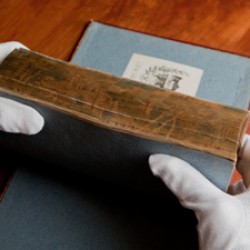
Librarian discovers hidden treasure
Beth Kilmarx, curator of rare books at the Binghamton University Libraries, recently found a painting hidden on the fore-edge of a 19th-century book. Watch video

University celebrates two lab openings
A May 3 ceremony celebrated the opening of two laboratories at the New York State Center of Excellence in Small Scale Systems Integration and Packaging. Read more

A burden too heavy to bear
Was there something about Southern society in the Civil War era that made suicide more likely? And what effect did so many suicides have on a society that before the war had roundly, even punitively, condemned the act? Binghamton historian Diane Miller Sommerville considers these questions in The New York Times’ Disunion blog. Read more
New estimate raises Civil War death toll
By combing through newly digitized census data from the 19th century, J. David Hacker, a demographic historian from Binghamton University, has recalculated the Civil War death toll, the New York Times reports. Read more

How your cat is making you crazy
Chris Reiber, a biomedical anthropologist at Binghamton, tells The Atlantic that the flu virus might boost our desire to socialize. It’s one of several theories in a piece devoted to parasites and their effect on behavior. Read more

